
Open letter: Reaction to article published by NRC
Patricia Veldhuis
Editor-in-Chief of NRC
P.O. Box 20673, 1001 NR Amsterdam
Subject: Reaction to the recent article published in NRC regarding Rwanda’s Ambassadorial nominee
Dear Editor-in-Chief,
The Embassy of the Republic of Rwanda in the Kingdom of the Netherlands acknowledges the publication of the article titled “Rwanda trekt omstreden minister terug als kandidaat-ambassadeur voor Nederland” published in NRC’s edition of January 7th 2025. While we recognize the freedom of the press as a cornerstone of democratic societies, we are compelled to address significant concerns regarding the content of this publication.
The article appears to heavily rely on one-sided opinions from individuals with doubtful credibility linked to their tendency to distort the reality of Rwandans abroad under the guise of defending human rights for their own interests that may include evading justice. These views are presented as unequivocal truths without the inclusion of balanced, verifiable, or objective evidence. Such an approach undermines the credibility of journalistic reporting and fosters a narrative that is both negative and aggressive toward the Republic of Rwanda.
We find this portrayal deeply troubling and incompatible with the standards of professional journalism. The Embassy urges NRC to adhere to the Guidelines of the Netherlands Press Council, particularly the following principles:
1. Truthfulness and completeness: Journalists must report truthfully, verifiably, and as comprehensively as possible, avoiding one-sided or biased reporting. An example from the article that demonstrates potentially untruthful, unverifiable, or incomplete reporting, as well as one-sided and biased coverage, is the following statement:
“No Rwandan ambassador can be trusted."
This quote is presented without further scrutiny or counterbalance. The article does not provide any perspective from Rwandan officials or other independent sources to verify or contest such a sweeping and severe claim. Additionally, the journalists don't critically evaluate whether this statement reflects the views of the broader Rwandan diaspora or whether it is an individual or organizational opinion.
For the article published on January 7, 2025, the Embassy was never contacted to clarify these allegations or to request a quote. For an earlier publication in May 2024, NRC contacted the Embassy, but the Embassy was unable to meet the requirement that a response be provided at very short notice. By failing to include diverse viewpoints or evidence to substantiate such assertions, the article risks reinforcing a one-sided narrative and does not meet journalistic standards for balance, fairness, and thoroughness.
2. Independence and integrity: Journalists should conduct their work independently and avoid (or prevent the appearance of) conflicts of interest. An example from the article that raises concerns about journalistic independence and the avoidance of (the appearance of) conflicts of interest is this statement:
“The article in NRC last year showed that the Netherlands plays an active role in confiscating passports and revoking residence permits from people with a Rwandan background on suspicion of involvement in the genocide. This often turned out to be people affiliated with the Rwandan opposition. They cannot count on a fair trial in Rwanda.”
This claim, while serious, is presented without citing specific evidence, sources, or data to substantiate it. The journalist references a prior NRC article but does not provide additional details or context to support the assertion that actions disproportionately target opposition members or explain how this conclusion was reached.
By failing to independently verify or critically analyse this claim, the article risks appearing to endorse the narrative of the afore mentioned individuals with doubtful credibility seeking to distort the reality on the ground and create confusion surrounding the people accused of genocide whose cases are subject to rigorous and methodical scrutiny by the Dutch competent authorities.
This lack of scrutiny and reliance on biased sources compromises the perception of impartiality and independence in the reporting.
3. Responsibility in publication: While journalists are free to determine what they publish, they must weigh the public interest against the potential harm caused by their reporting. An example from the article that supports the argument that journalists did not weigh the interest of publication against the potential harm is the following excerpt:
“We do not yet know whether the new staff includes any dangerous people.”
This statement raises suspicion about the Embassy staff without providing concrete evidence. By publishing this speculative comment, the article risks fostering a climate of fear and mistrust among members of the Rwandan diaspora and others interacting with the Embassy of Rwanda. It could also harm the reputations of individuals within the new staff who do not have any connection to misconduct, potentially exposing them to unwarranted suspicion or hostility. The journalists appear to have prioritized the inclusion of this provocative statement over considering the harm it could cause to individuals and diplomatic relations.
The Embassy strongly believes that the article in question fails to meet these standards. It amplifies unsubstantiated allegations and perpetuates a biased narrative that seeks to damage Rwanda’s reputation and the integrity of its diplomatic mission.
We respectfully call upon NRC and its journalists to uphold the principles of fairness and professionalism in their reporting. The Embassy invites your editorial team to take initiatives to gain a more nuanced and balanced understanding of Rwanda’s policies and diplomatic efforts. Constructive dialogue, rather than inflammatory rhetoric, is essential for fostering mutual understanding and trust.
In light of the damage caused, we kindly request the following:
Opportunity to respond: We ask NRC to offer the Embassy an equal opportunity to present our perspective in the form of an op-ed or a dedicated space in your publication. This will allow us to address the inaccuracies and provide balanced context to the points raised in the article.
Correction of inaccuracies: Where appropriate, we urge NRC to review and correct any factual inaccuracies or unsupported claims that may have been made in the article.
Commitment to balanced reporting: We request that future reporting related to Rwanda and its diplomatic missions include an effort to balance perspectives, ensuring that the voices of all stakeholders are fairly represented.
We look forward to your response.
Sincerely,

Rwanda at the OPCW Executive Council in The Hague
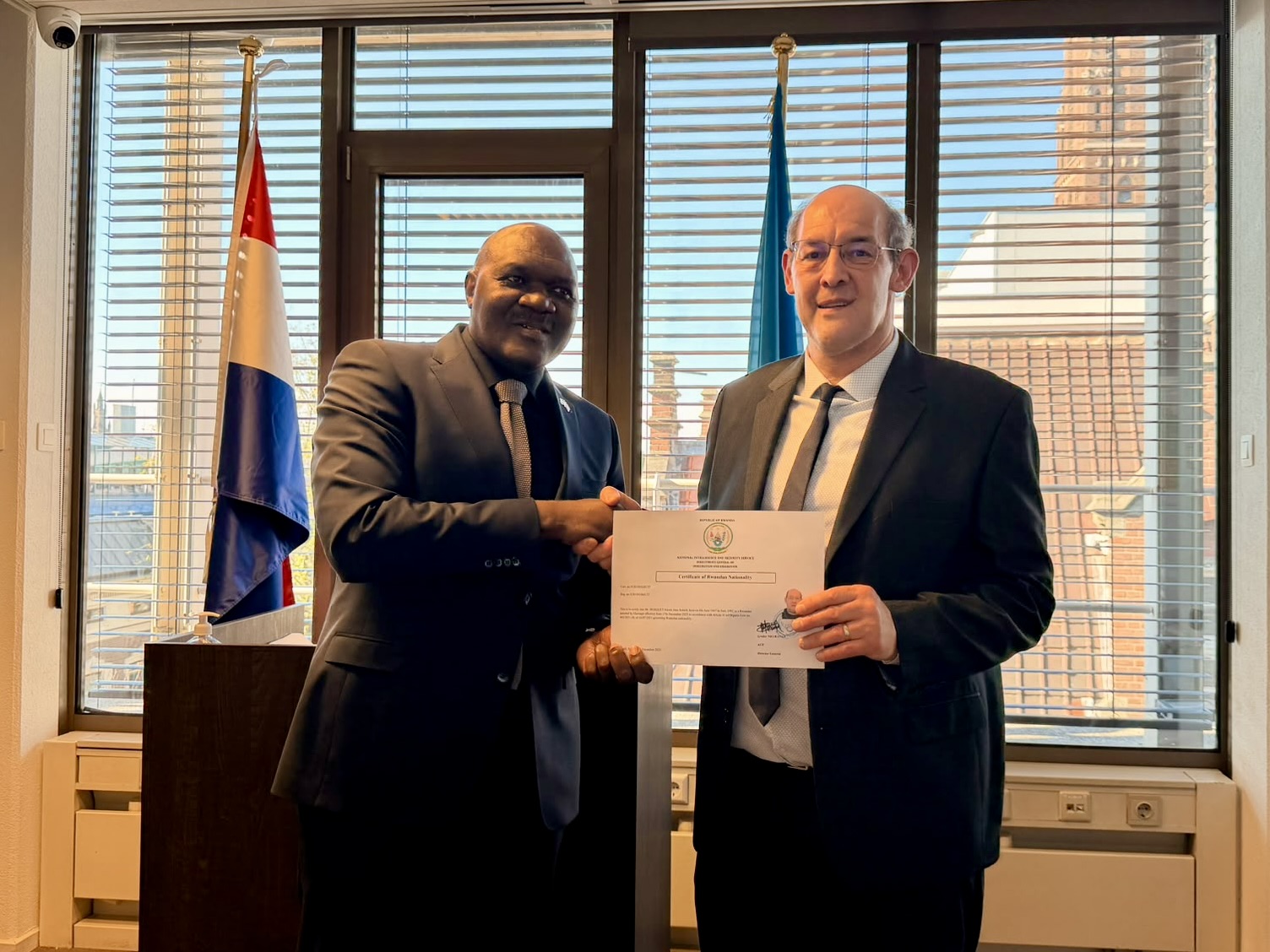
Oath of Rwandan nationality taken at the Embassy

Rwanda takes centre stage at Embassy Festival

Experience Rwanda at the Embassy Festival 2026

Umuganura 2026 celebrated in Groningen
